What Happens After an Accident When an Insurance Company is Demanding a Police Report and One Isn’t Available?

October 30, 2020

Many, if not most minor accidents do not require a police report...

Why is a Police Report Necessary?
Reality check… Many, if not most minor accidents do not require a police report for a claim to be payable by an insurance company. An exception may be those incidents that involve a crime such as:

  • Theft
  • Vandalism

Outside of most incidents, if an insurance company is suggesting a police report is required, there is likely a short list of reasons why :

  • There are questions about the accuracy of the testimonies of those involved in the accident.
  • The physical evidence doesn't match their statements.
  • There is something else suspicious surrounding the incident.

If a police report is not available and the insurance company is not being reasonable with that reality, what can you do? Here’s a couple of suggestions:

  • Press for Determination of Coverage : Ask the company for a determination of coverage. Explain in writing that you are willing to work with them including making a current police report. In the letter politely ask them to either indicate coverage is available - or - to deny the claim. If denial is their determination, request the company put that in writing.
  • If an insurance company is going to deny coverage, they must provide support for their reasoning, quoting chapter and verse straight from your specific auto policy. Their reply will be the basis for your action against them - or - a reasonable explanation for your lack of coverage.
  • Alert your State Insurance Department: If you reported the claim to the insurance company in a timely fashion and it has been an extended period of time to determine coverage, it may be time to take action.
  • File a complaint with the State Insurance Department.  Here is a link to the Insurance Departments for each state in the US. Most states provide the means to submit a complaint right online.
  • Seek Legal Council: Regardless of some people’s perception, insurance companies are held to a very high standard of care to their customers. If found guilty of intentionally treating clients poorly, a “bad faith” claim against them can be brought by the offended policyholder.
  • Insurance companies are well aware of the risk associated with “bad faith”. They will attempt to avoid the potential of facing the losing end of this type of claim.
  • Any lawyer that works in the insurance realm will be eager to take a legitimate “bad-faith” claim.

As a policyholder of an insurance company you have numerous means afforded to you by Agencies of the State, Insurance Statutes, prior Court Decisions and broad consumer protections to fight back.

Flip Side:
As a policyholder… you have obligations as well. Be certain to:

  • Report your claim in a timely fashion to allow the insurance company to protect their (and your) interest.
  • Always be entirely truthful throughout the claim process.
  • Be responsive to questions necessary to learn the circumstances surrounding the accident.

In short… be upright, responsive and willing to work with those involved. When cooperation and honesty is your approach from the start, you should have nothing to worry about. If you have an agent, get them involved in the process. It is our job to provide guidance and be a facilitator in this process. If you don’t have strong agent representation, consider us willing to apply for that job! 


-------------------------------

“Ask Jeff" is a weekly post made on the RyanAgency.com Blog. 

Submit an insurance-related question to “Ask Jeff”. 

-------------------------------

This article may have been originally published at Quora.com.

To see Jeff's Quora.com profile click here.

By Jeff Ryan April 7, 2026
Factors You Can’t Easily Control These factors are built into your profile, but still play a major role: Your location: Claim trends, traffic, and weather patterns where you principally drive. Your age and driving experience: Especially for younger drivers. Other drivers in your household: Their age and driving history. The vehicle you own: Unique to the Year, Make, Model, and Sub-model’s damageability and cost of parts/labor. These factors significantly influence price differences, but they don’t tell the whole story. Factors You Can Control This is where habits and wise decisions can make a real difference: Your driving habits: Minimizing tickets and accidents can have a direct impact. Your coverage choices: Liability limits, deductibles, and optional coverages can vary widely. Your insurance consistency: Avoiding lapses in coverage. Your annual mileage: How much and how often you drive. Discount opportunities: Bundling, pay-in-full, NYS defensive driving course. Your Insurance Score (Yes—You Can Influence It) Insurance companies use a credit-based insurance score as part of their rating process. While it’s based on financial behaviors, it is not permanent—and it can be improved over time. Simple habits like: Paying bills on time Reducing outstanding debt Avoiding excessive credit inquiries… can positively impact your score—and in turn, your insurance rates. Your insurance score is under your control and a worthy mid to long-term project in and of itself. For more information on what you can do to positively influence your score, see: Great 8 Tip #8 - What's Credit Got to Do with Insurance? How Can I Improve My Auto Insurance Score Why Comparing Rates Doesn’t Work When someone says, “I only pay…” , the uniqueness of their fingerprint is missing. What are their: Deductibles Driving history Insurance score Household profile Coverage limits: what they may be giving up in terms of protection. Price without context can be misleading and discouraging.

By Jeff Ryan - CLU, ChFC, AIA, CIC, CPCU December 7, 2025
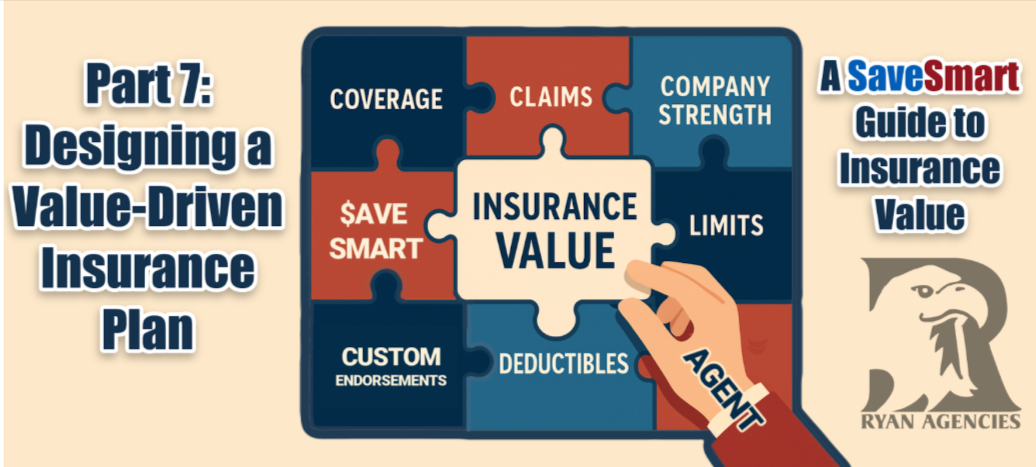
Part 7 – Designing a Value-Driven Insurance Plan
By Jeff Ryan - CLU, ChFC, AIA, CIC, CPCU November 24, 2025
Part 6 – Advice, Advocacy, and Answers
By Jeff Ryan - CLU, ChFC, AIA, CIC, CPCU November 12, 2025
Part 5 – Can Your Company Deliver?
By Jeff Ryan - CLU, ChFC, AIA, CIC, CPCU October 29, 2025
Part 4 – Custom Coverage = Real Protection
By Jeff Ryan - CLU, ChFC, AIA, CIC, CPCU October 15, 2025
Part 3: Coverage Limits - "The Ceiling You Don't Want to Collapse"
By Jeff Ryan - CLU, ChFC, AIA, CIC, CPCU October 1, 2025
Part 2 – The Risks of Chasing Cheap
By Jeff Ryan - CLU, ChFC, AIA, CIC, CPCU September 17, 2025
Part 1: What Are You Really Paying For?
Insurance fraud is a significant problem, exceeding $300 billion annually, with the Property and Cas
By Jeff Ryan May 6, 2025
Insurance fraud is a significant problem, exceeding $300 billion annually, with the Property and Casualty sector contributing nearly $50 billion to that total.
Living in New York, you might have a stack of insurance documents—auto, homeowners, health, or life
By Jeff Ryan April 28, 2025
Living in New York, you might have a stack of insurance documents—auto, homeowners, health, or life insurance policies—filed away somewhere. But how long should you keep those documents, and specifically, what papers should you hold on to?